
IDs-LE
Extract every UUID, ULID, NanoID, ObjectId and Snowflake, and decode the time inside
The command-line tool and its MCP server are written and tested. The VS Code extension is not written yet, so there is nothing to install from the Marketplace or Open VSX — those links appear here when it ships rather than before.
No editor in the loop? ids-le mcp runs the same engine as an MCP server, so an agent can call extract_ids over stdio, with no editor and no Node, and cargo install ids-le puts the same check in a terminal. Every way to install it.
What IDs-LE does
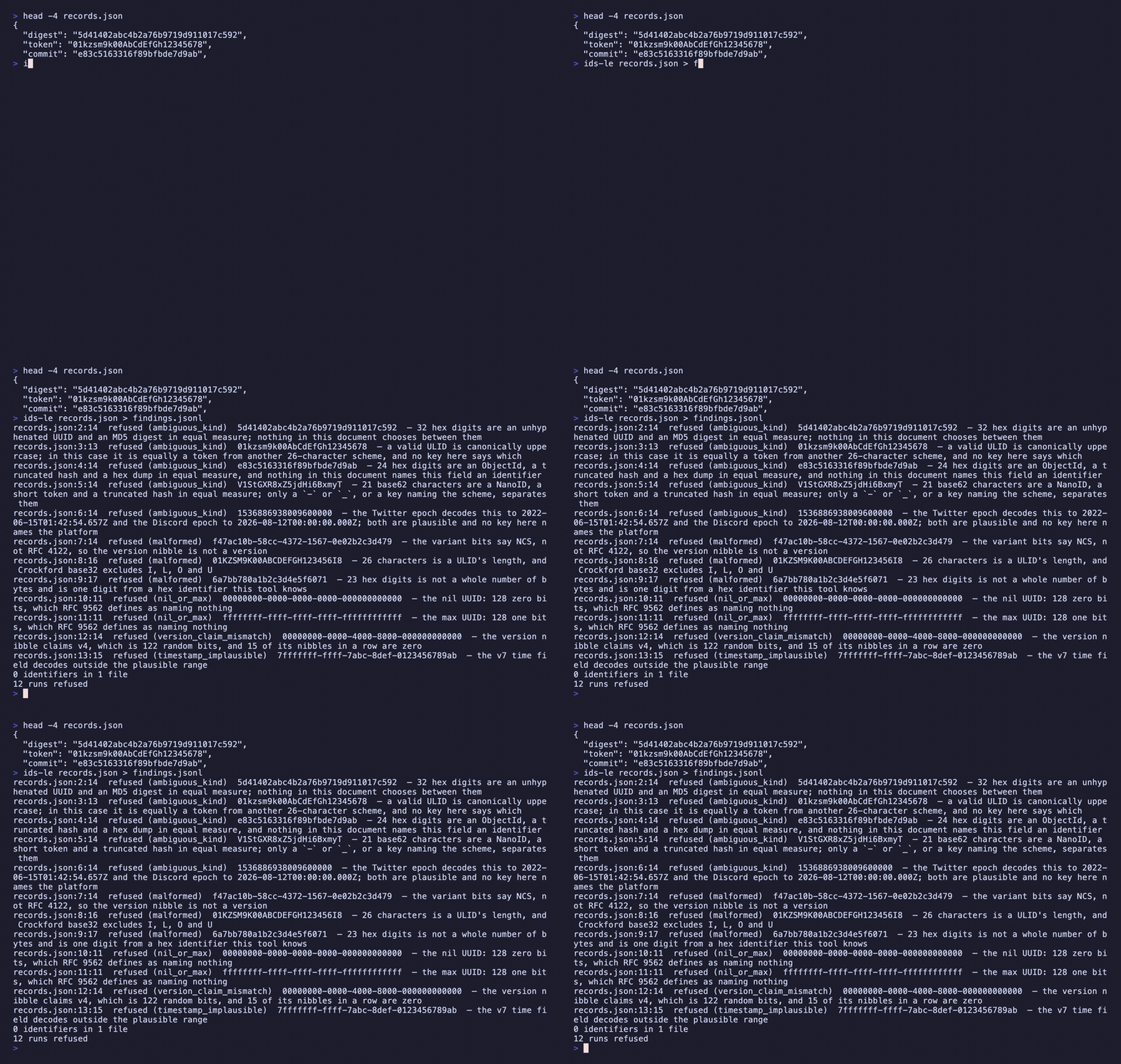
An identifier usually records when and where something was made, and almost none of that is readable by eye. IDs-LE finds every UUID, ULID, NanoID, MongoDB ObjectId and Snowflake in a tree, says what each one is, and decodes the timestamp inside the ones that carry a clock — six bit layouts over three epochs, one of which starts in 1582, all reported as the same ISO-8601 UTC string. It refuses rather than guesses: thirty-two hex digits are an unhyphenated UUID and an MD5 digest in equal measure, so that run comes back as a row with a named reason instead of a confident wrong answer.
What people use it for
Date an id with no lookup
A v7 UUID, a ULID, an ObjectId or a Snowflake in a log resolves to an instant without a database in the loop.
Stop a regex mislabelling a digest
A run that fits two schemes is reported as ambiguous, not classified as whichever pattern happened to match first.
Sweep a repo for placeholders
The nil UUID, a v4 that is plainly not random, and a timestamp before 1990 each come back named rather than dropped.
Install IDs-LE
Command lineComing soon
cargo install ids-leNot on crates.io yet — v0.3.2 builds from the repository today, and this command starts working the day it publishes. Follow the repository.
VS CodeComing soon
ext install nolindnaidoo.ids-leThe extension is not written yet, so this id resolves to nothing on the Marketplace. It is the id it will take. Follow the repository.
Cursor / VSCodiumComing soon
cursor --install-extension OffensiveEdge.ids-leSame again for the forks, which resolve Open VSX rather than the Marketplace. Follow the repository.
Zed
ids-le mcpWorks in Zed today — add the command above as a custom MCP server from the agent panel, and extract_ids appears in its tool list. There is no one-click listing in Zed's extension registry yet.
AI agents
ids-le mcpRuns IDs-LE's engine as an MCP server over stdio, so an agent can call extract_ids with no editor and no Node. The binary is the server — there is nothing else to install.
Where it ships
One engine, 6 places to get it. The ids differ by registry — copy the one for the editor you use.
VS Code Marketplace
VS Code itselfnolindnaidoo.ids-leOpenthe extension is not written yet — this links the sourceOpen VSX
Cursor, Windsurf, VSCodium and the other forksOffensiveEdge/ids-leOpenthe extension is not written yet — this links the sourceMCP server
the same engine, callable by an agent with no editor in the loopids-le mcpOpenshipped by the binary, not by npm — no package to link yetZed
as a custom MCP server todayids-le mcpOpenno listing yet — this links Zed’s instructions for adding it by hand
Where IDs-LE lives
- GitHubsource, issues, changelog
- MCP registryio.github.nolindnaidoo/ids-le
The other 15

Extract every string in a codebase, with its position, so a person can read them

Extract every hardcoded number in a codebase, so a person can check them

Extract every file path in a codebase, and say whether it still points at anything

Extract every color in a codebase, and say which ones are not in your palette

Extract every URL in a codebase, with its protocol and exact position

Extract every date and timestamp, and the exact instant each one resolves to

Extract every quantity with its unit, normalized, and refuse the ambiguous ones by name

Extract every IP address, CIDR block and MAC, normalized and classified by scope

Find every regex in a codebase, and report which can be driven into catastrophic backtracking

Check whether a page is scrapeable before the scraper is written, and say when it cannot tell

Find where one dependency is constrained differently across a repository's manifests

Identify the i18n library a project uses, then audit its catalogs by that library's rules

Find hardcoded credentials in a codebase, and never print one into the report

Compare the dotenv files in a tree, and say which keys are missing from which

Find the Unicode that hides meaning — bidi controls, invisibles, homoglyphs, mixed scripts